


The Dangers of Dependence: A Discussion on Global Security
- Altered State

- Jun 25, 2025
- 3 min read
Updated: Dec 8, 2025

Insights from a Renowned Panel
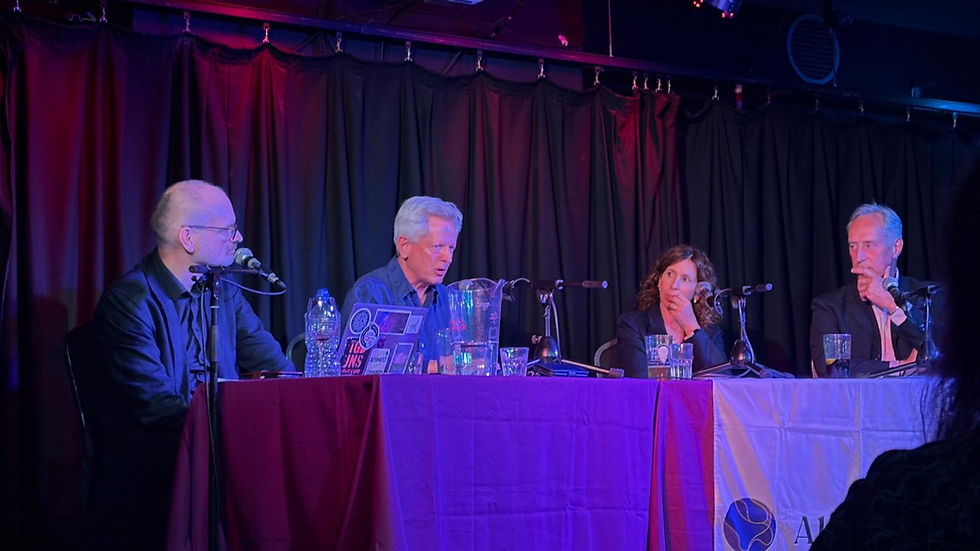
There was a sense of gravitas as we gathered to hear a qualified panel discuss the UK’s defense in today’s dangerous world. General Sir Tim Radford was the Deputy Supreme Commander, NATO Europe during the last Russian invasion of Ukraine. Tim played a pivotal role in the Alliance’s decision-making and was instrumental in bringing new allies such as Sweden and Finland. Ana Juncos Garcia, a professor of European Politics at Bristol University, specializes in defense and security matters. Richard Graham, a former diplomat and MP, has served on Parliamentary Committees for National Security and promoting democracy globally. Our host, Colin Gavaghan, is a distinguished Professor of Digital Futures at Bristol University’s Law School.
I pen this reflection a day after our discussion titled TRUMP & VANCE - WITH FRIENDS LIKE THESE, WHO NEEDS ENEMIES? The leaders of NATO member states have emerged from a slimmed-down summit. This adjustment was aimed at matching the attention span of one of their members. They released a joint statement reaffirming their commitment to mutual protection through Article 5. The statement underscored Russia as the principal threat, pledging to return to Cold War-era defense spending levels—5% of GDP—within a decade. Funding for Ukraine will count toward this percentage. This was the minimum requirement our panel expressed from the summit.

Key Discussion Points
Throughout our discussion, we covered vital topics such as the current state of alliances, the need for new ones, and whether the NATO leaders’ declarations hold any real significance. This is particularly relevant given Trump’s often ambiguous position and his threats to fellow members. We also examined the rift between the US and Europe, questioning the extent to which the damage can be repaired. The panel acknowledged the "special relationship," crucial for the UK, but one that remains important for the US security and intelligence community as well.
The room was captivated as we listened to every word. Tim shared that NATO is adapting. He mentioned that despite any squeamishness about the language used, the increase in defense spending to effectively deter Russia is a direct consequence of Trump's actions. Ana pointed out the glaring absence of comparable action in Europe concerning conflicts like Gaza.
Industrial Costs and Social Implications
How do we fund the massive new amounts of weaponry? Richard highlighted the recent uptick in welfare payments for economically inactive members of society. Ana cautioned against the rise of populist parties, many with pro-Putin sympathies, that are eager to exploit the current situation. The panel agreed that the Prime Minister must present a compelling national security case to the British people to gain their support.
Despite the challenges, there was a feeling of hope. The combination of economic strength and political will can deter aggressors. Tim likened the additional defense spending to an increased insurance premium. The key question remains: Can the political will endure?
The Toolbox for Future Security
Ana cautioned against over-reliance on the US military. She recommended reading Underground Empire: How America Weaponized the World Economy by Henry Farrell and Abraham Newman. This book suggests that the United States has transformed crucial pathways of the global economy into tools of domination over foreign nations and businesses, whether they are rivals or allies. This strategy has allowed the US to maintain its global supremacy.
Richard acknowledged that while the current relationship with the US may not be perfect, it is far superior to having no relationship at all. Although we may be uneasy about US tech companies dominating our lives, he argued that it's better than being controlled by Chinese state enterprises. He also advocated for a comprehensive national security strategy that transcends the existing silos of responsibility.
The Need for Balance and Reflection
Tim proposed listening to The General and The Journalist podcast. He emphasized the importance of balance in our lives, recalling how a Special Forces hero introduced him to the need for equilibrium amidst the extreme stress of demanding jobs. He encouraged attendees to write letters to their loved ones, similar to how soldiers do before heading into battle. This heartfelt statement stunned the room, showcasing emotional depth and simplicity.
A Musical Interlude
As is usual for such events, we spun a themed playlist, featuring poignant songs that resonate with the themes discussed:
The Clash – "The Call Up"
Manic Street Preachers – "Theme From MAS*H"
The Waterboys – "Old England"
Edwin Starr – "War"
The White Stripes – "Seven Nation Army"
Black Sabbath – "War Pigs"
The Doors – "Unknown Soldier"
Jona Lewie – "Stop The Cavalry"
PJ Harvey – "On Battleship Hill"
Idles – "War"
John Lennon and Yoko Ono – "Give Peace A Chance"
In conclusion, the discussions revolved around crucial themes of defense, alliance dynamics, and the need for strategic clarity in a world where the stakes are high and the threats are ever-evolving. The need for comprehensive strategies and robust national security narratives has never been more pressing.


Comments